
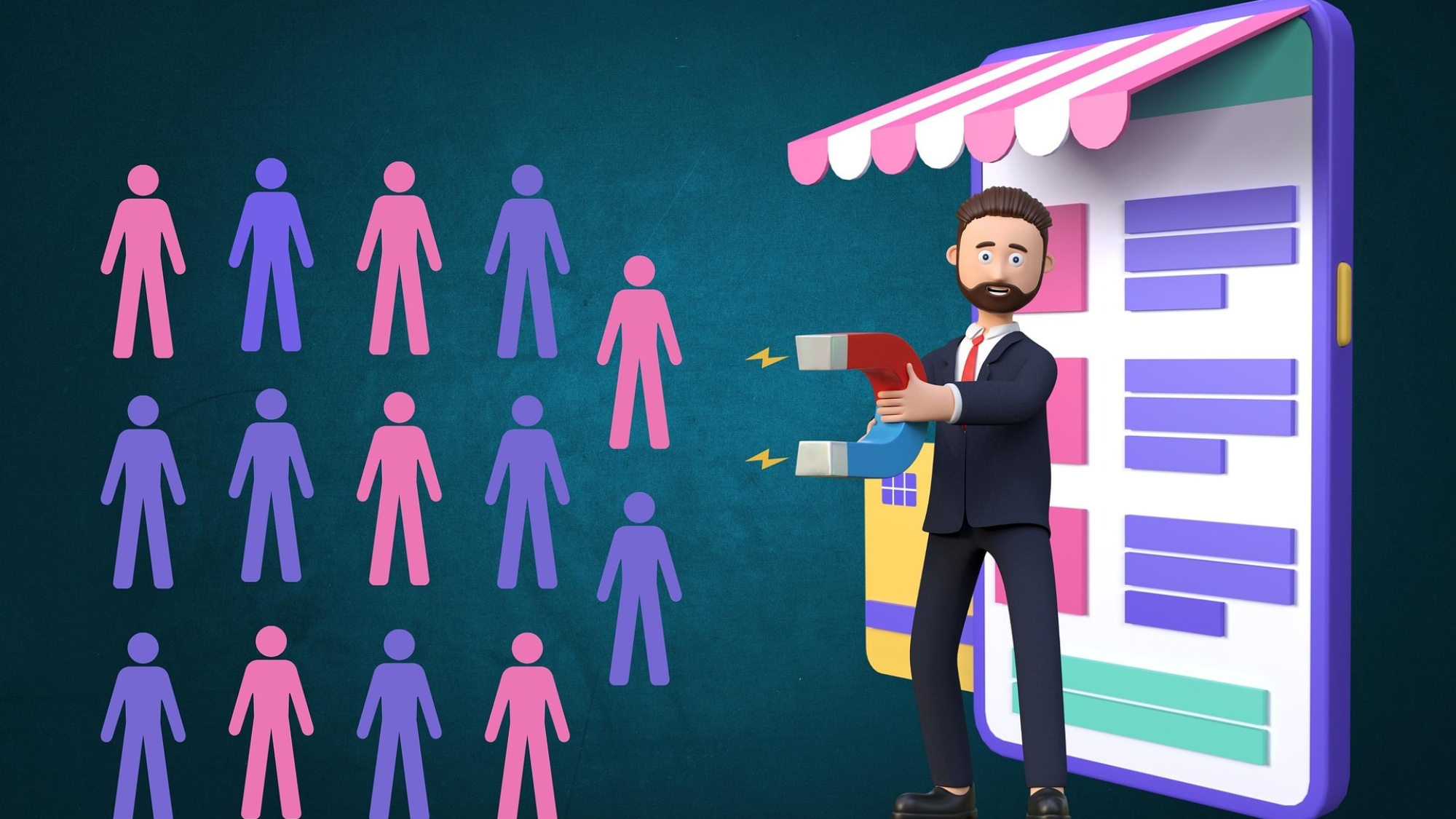
Getting leads is only the beginning.
A visitor may download your free guide, fill out a contact form, request a quote, follow your Instagram page or visit your pricing page. But that does not necessarily mean they are ready to buy.
Some prospects need more information. Others are comparing competitors. Some simply need time before making a decision.
This is where a lead nurturing strategy becomes important.
Instead of treating every lead as an immediate customer, businesses can build a system that keeps prospects engaged, answers their questions and gradually moves them toward a buying decision.
For businesses investing in SEO, social media, paid advertising or content marketing, effective lead nurturing can help turn more of that existing traffic into meaningful opportunities.
What Is Lead Nurturing?
Lead nurturing is the process of building relationships with potential customers through relevant communication and follow-up until they are ready to take the next step.
A lead nurturing strategy may use:
- Email sequences
- Educational content
- Retargeting
- Personalized offers
- Automated follow-ups
- Lead segmentation
- Webinars
- Case studies
- Product demonstrations
- Consultation invitations
The goal is not to constantly sell.
The goal is to provide the right information at the right stage of the customer journey.
For example, someone who has just discovered your business may need an educational article, while someone who has visited your pricing page several times may be ready for a consultation or product demonstration.
Why Lead Nurturing Matters for Modern Businesses
Many businesses concentrate heavily on generating new traffic.
They run advertisements, publish social media content and invest in SEO.
But there is another question worth asking:
What happens after someone becomes a lead?
If the answer is simply “we contact them once,” there may be a significant gap in the customer journey.
People often do not purchase immediately.
They may need to:
- Understand the problem
- Compare solutions
- Evaluate pricing
- Build trust
- Discuss the purchase internally
- See proof that the solution works
- Wait until the timing is right
A structured lead nurturing process keeps the conversation going without requiring someone from the business to manually follow up with every prospect.
This is particularly useful as the number of leads grows.
Lead Generation vs Lead Nurturing
Lead generation and lead nurturing are connected, but they solve different problems.
Lead generation focuses on attracting and capturing potential customers.
Examples include:
- Search engine optimization
- Social media marketing
- Paid advertising
- Lead magnets
- Landing pages
- Referral campaigns
Lead nurturing focuses on what happens after the lead has been captured.
Examples include:
- Follow-up emails
- Educational content
- Product information
- Retargeting
- Personalized recommendations
- Consultation reminders
A simple way to understand the difference is:
Lead generation brings people into the system. Lead nurturing helps move them through the system.
A business can therefore have plenty of leads but still struggle with conversions if its follow-up process is weak.
How to Build a Lead Nurturing Strategy
A good lead nurturing strategy does not have to be complicated.
Start with these seven steps.
1. Define Your Ideal Customer
Before creating automated emails or follow-up campaigns, understand who you are trying to convert.
Identify:
- Their main problem
- Their goals
- Their budget
- Their objections
- Their buying process
- Their preferred communication channels
- The information they need before purchasing
The better you understand your audience, the easier it becomes to create useful nurturing content.
2. Segment Your Leads
Not every lead should receive the same message.
For example, an online business could separate leads into groups such as:
New leads:
People who have just discovered the business.
Engaged leads:
People who regularly open emails or consume content.
Product-focused leads:
People who have visited product or service pages.
High-intent leads:
People who have requested a quote, booked a call or started a purchase.
Segmentation allows businesses to make their communication more relevant.
Instead of sending the same email to everyone, the business can respond to the prospect’s interests and behavior.
3. Create Content for Different Buying Stages
A lead at the beginning of the customer journey needs different information from someone who is ready to purchase.
A simple framework is:
Awareness
The prospect is identifying a problem.
Useful content:
- Educational blog posts
- Guides
- Checklists
- Videos
- Industry insights
Consideration
The prospect is researching possible solutions.
Useful content:
- Comparisons
- Case studies
- Tutorials
- Webinars
- Detailed guides
Decision
The prospect is evaluating whether to buy.
Useful content:
- Demonstrations
- Testimonials
- Pricing information
- Consultations
- Free trials
- Product-specific information
This approach prevents businesses from trying to sell too early.
4. Build a Follow-Up Sequence
A lead nurturing campaign should have a logical sequence.
For example:
Day 1: Deliver the promised resource.
Day 3: Send a useful educational article.
Day 5: Explain a common problem and how to solve it.
Day 8: Share a relevant case study or example.
Day 12: Explain your solution.
Day 15: Offer a consultation, demonstration or next step.
The exact timing will depend on the business and buying cycle.
The important part is consistency.
A prospect should not have to remember your business every time they need information.
Your system should keep the relationship active.
5. Personalize the Customer Journey
Personalization does not necessarily mean creating a completely different campaign for every person.
Even simple behavioral signals can make communication more relevant.
For example:
If someone downloads an SEO guide, they could receive additional SEO resources.
If someone visits a pricing page, they could receive information about packages or frequently asked questions.
If someone books a consultation, they could automatically receive preparation instructions and reminders.
This type of behavioral marketing can make the customer journey feel more useful rather than repetitive.
6. Automate Repetitive Follow-Ups
Manual follow-up becomes increasingly difficult as lead volume grows.
A marketing automation system can trigger actions based on customer behavior.
For example:
Lead submits form → CRM records lead → welcome email is sent → educational sequence begins → engagement is tracked → high-intent behavior triggers sales notification.
This creates a connected process instead of a collection of disconnected marketing activities.
Automation does not eliminate the need for human interaction.
Instead, it can help teams spend more time on conversations that actually require human attention.
7. Measure What Happens After Lead Capture
A lead nurturing strategy should be measured beyond email opens or social media engagement.
Important metrics include:
- Lead-to-customer conversion rate
- Qualified lead rate
- Email click-through rate
- Consultation bookings
- Sales conversion rate
- Cost per qualified lead
- Customer acquisition cost
- Time to conversion
- Revenue generated from nurtured leads
These metrics help businesses identify where prospects are dropping out of the customer journey.
For example, if many people download a lead magnet but very few request a consultation, the problem may not be lead generation.
The gap could be somewhere inside the nurturing process.
Common Lead Nurturing Mistakes
Sending Too Many Sales Messages
If every message says “Buy now,” prospects may stop paying attention.
A useful nurturing campaign should educate as well as promote.
Treating Every Lead the Same
Someone who downloaded a beginner’s guide is not necessarily at the same buying stage as someone who requested a quote.
Segmentation makes communication more relevant.
Ignoring Old Leads
Some leads are not ready today but may become valuable customers later.
Instead of abandoning them, businesses can continue providing useful information at an appropriate frequency.
Using Automation Without a Strategy
Automation itself is not a strategy.
A collection of automatic emails will not automatically create conversions.
Businesses first need to understand the customer journey and then decide where automation can improve it.
Failing to Connect Marketing and Sales
A lead may receive marketing emails while the sales team has no idea what the prospect has already viewed or downloaded.
Connecting customer data and communication systems can create a smoother handoff.
A Simple Lead Nurturing Funnel
Here is a basic framework that businesses can adapt:
Traffic
↓
Landing Page
↓
Lead Magnet / Offer
↓
Lead Capture
↓
Segmentation
↓
Educational Content
↓
Automated Follow-Up
↓
High-Intent Action
↓
Sales Conversation
↓
Customer
The exact structure will vary by business, but the principle remains the same.
Do not think of lead capture as the end of marketing.
Think of it as the beginning of a relationship.
How GlobalMarketo Can Help
At GlobalMarketo, the focus is not limited to attracting website visitors.
The broader approach combines web development, SEO, marketing automation, funnels and business strategy to create connected digital growth systems.
For a business, that can mean building a journey where:
A visitor discovers your website → becomes a lead → receives relevant information → is nurtured automatically → takes a high-intent action → enters a sales conversation.
This approach can help businesses get more value from the traffic and leads they are already generating.
GlobalMarketo also provides resources around automated marketing funnels, conversion-focused web development and AI search optimization, making lead nurturing a natural part of a broader digital marketing system.
Lead Nurturing and Marketing Automation: What’s the Difference?
These terms are often used together, but they are not exactly the same.
Lead nurturing is the strategy of building relationships with prospects and moving them toward conversion.
Marketing automation is the technology and workflows that can help execute that strategy automatically.
For example:
The strategy might be:
Educate a new lead before presenting a sales offer.
The automation could be:
Send an educational email after signup, wait three days, send a case study, track engagement and then send a relevant offer.
In simple terms:
Lead nurturing is the strategy. Marketing automation is one of the systems used to execute it.
Frequently Asked Questions
What is a lead nurturing strategy?
A lead nurturing strategy is a structured process for educating, engaging and following up with potential customers until they are ready to take a purchasing action.
Why is lead nurturing important?
Lead nurturing helps businesses maintain relationships with prospects who are not ready to purchase immediately. It can also create a more consistent customer journey and reduce dependence on manual follow-ups.
What is the difference between lead generation and lead nurturing?
Lead generation attracts and captures potential customers, while lead nurturing develops those leads through relevant communication and follow-up.
How does marketing automation help with lead nurturing?
Marketing automation can send messages, segment leads, trigger follow-ups and track customer behavior based on predefined rules or actions.
How often should businesses follow up with leads?
There is no universal schedule. Follow-up frequency should reflect the buying cycle, customer expectations and the type of offer. The goal is to remain useful without overwhelming the prospect.
Can small businesses use lead nurturing?
Yes. Small businesses can start with a simple system such as a lead magnet, email sequence, basic segmentation and automated follow-up, then expand as lead volume grows.
Final Thoughts
Generating a lead is not the same as generating a customer.
The real opportunity begins after someone shows interest in your business.
A well-designed lead nurturing strategy helps businesses stay relevant, provide useful information and guide prospects toward the next appropriate action.
The process can be as simple as:
Attract → Capture → Understand → Educate → Follow Up → Convert.
As businesses generate more traffic and leads, having a repeatable nurturing system becomes increasingly valuable.
Instead of chasing every prospect manually, businesses can build a customer journey that works consistently in the background while their team focuses on high-value conversations and business growth.
If your website is generating traffic but too many potential customers disappear without taking action, the next step may not be more traffic.
It may be a better system for what happens after the lead arrives.
Ready to build a more connected digital growth system? Explore GlobalMarketo and discover how SEO, web development, funnels and marketing automation can work together.
 Proven Sales Funnel Strategies